
Climate Neutral
Awards


Tuvalu, one of the world’s smallest island nations, is facing an existential threat as rising sea levels driven by climate change steadily erode its land and endanger its future. Saltwater intrusion is contaminating freshwater supplies, coastal erosion is damaging homes and infrastructure, and increasingly severe storms are placing additional pressure on vulnerable communities. Despite contributing only a tiny fraction of global greenhouse gas emissions, Tuvalu is among the countries most affected by the climate crisis, making it a powerful symbol of climate injustice. As the nation works to protect its people, culture, and sovereignty, its struggle highlights the urgent need for global action on climate change. Tuvalu’s story is not just about a sinking island—it is a warning of what many coastal and low-lying communities around the world could face if rising temperatures and sea levels continue unchecked.

Farmers across Laos are embracing agroecological practices to improve crop yields while reducing dependence on costly chemical inputs. By working in harmony with nature, these methods help restore soil health, conserve water, strengthen biodiversity, and build resilience against climate-related challenges. Agroecology is not only improving food security and rural livelihoods but also empowering communities to protect their land and resources for future generations.

In rural Cambodia, solar-powered water kiosks are providing communities with reliable access to clean and affordable drinking water. Developed by local innovators, these systems help reduce waterborne diseases, improve public health, and support sustainable development in areas where access to safe water remains limited. By harnessing renewable energy, the kiosks offer a practical and environmentally friendly solution that is transforming daily life for thousands of people.
.jpg)
Solar energy is helping schools in rural Bangladesh overcome unreliable electricity and create better learning environments for students. By powering classrooms, lighting, and essential educational equipment, solar panels enable learning to continue even during power outages. These renewable energy solutions are improving access to education while supporting cleaner and more sustainable development in underserved communities. Read more.

The Himalayas are melting at an alarming rate, threatening water supplies for millions across South Asia. As glaciers shrink, rivers that sustain communities, agriculture, and ecosystems face increasing uncertainty. Scientists warn that continued glacier loss could have far-reaching consequences for regional water security, economic stability, and climate resilience, making urgent action on climate change more important than ever.

Rice is a staple food for billions of people, yet traditional farming methods often require large amounts of water and can contribute to greenhouse gas emissions. Across Asia, farmers are adopting climate-smart techniques such as improved irrigation systems, drought-resistant rice varieties, and sustainable soil management. These innovations help increase productivity while conserving natural resources and reducing environmental harm. By making agriculture more efficient and resilient, sustainable rice farming supports food security, protects ecosystems, and helps communities adapt to a changing climate.

Rapid urban growth and increasing traffic have made air pollution a major challenge in Manila. To address this issue, the city is investing in cleaner public transportation systems, including low-emission and electric buses. These vehicles help reduce greenhouse gas emissions, improve air quality, and create a healthier environment for commuters. In addition to environmental benefits, greener transport systems can generate new jobs, improve mobility, and make cities more sustainable. The transition to clean transportation demonstrates how urban areas can balance economic development with environmental responsibility.

The ocean plays a vital role in Fiji's economy, culture, and environment. However, marine ecosystems face growing threats from climate change, pollution, and overfishing. To address these challenges, Fiji has developed innovative financing mechanisms that fund marine conservation and sustainable ocean management. These efforts help protect coral reefs, preserve biodiversity, and strengthen the livelihoods of communities that depend on marine resources. By linking financial investment with environmental protection, Fiji is creating a model for sustainable ocean governance that can inspire other island nations around the world.
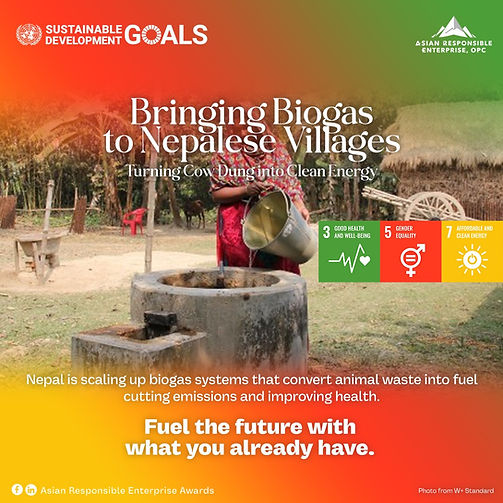
Many rural communities in Nepal rely on traditional fuels such as firewood for cooking and heating, contributing to deforestation and indoor air pollution. Biogas systems convert organic waste into a renewable energy source that can be used for daily household needs. This technology reduces greenhouse gas emissions, improves sanitation, and lowers health risks caused by smoke exposure. It also decreases dependence on wood fuel, helping conserve forests and natural resources. By expanding access to affordable and sustainable energy, biogas programs are improving living conditions and supporting long-term rural development across Nepal.